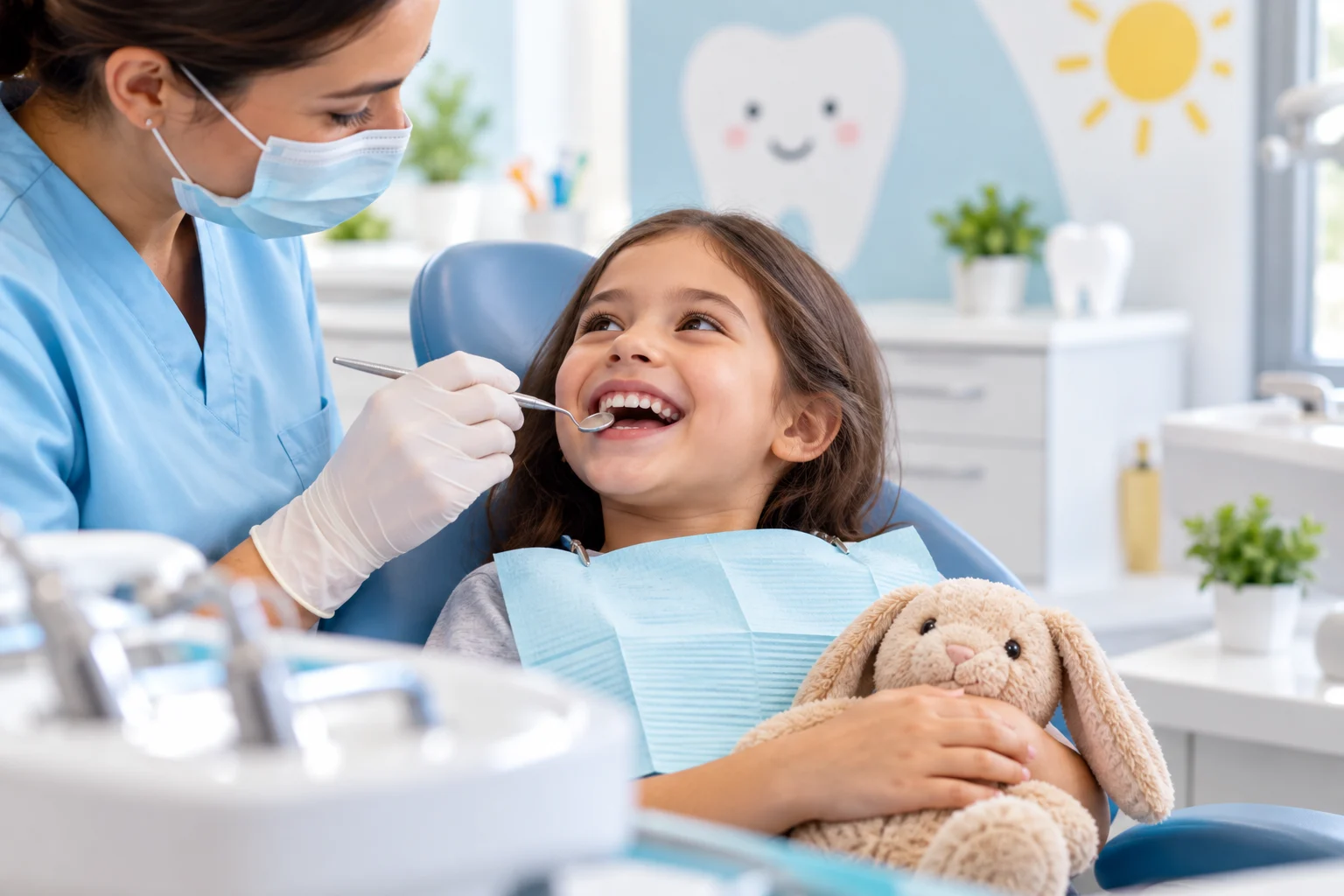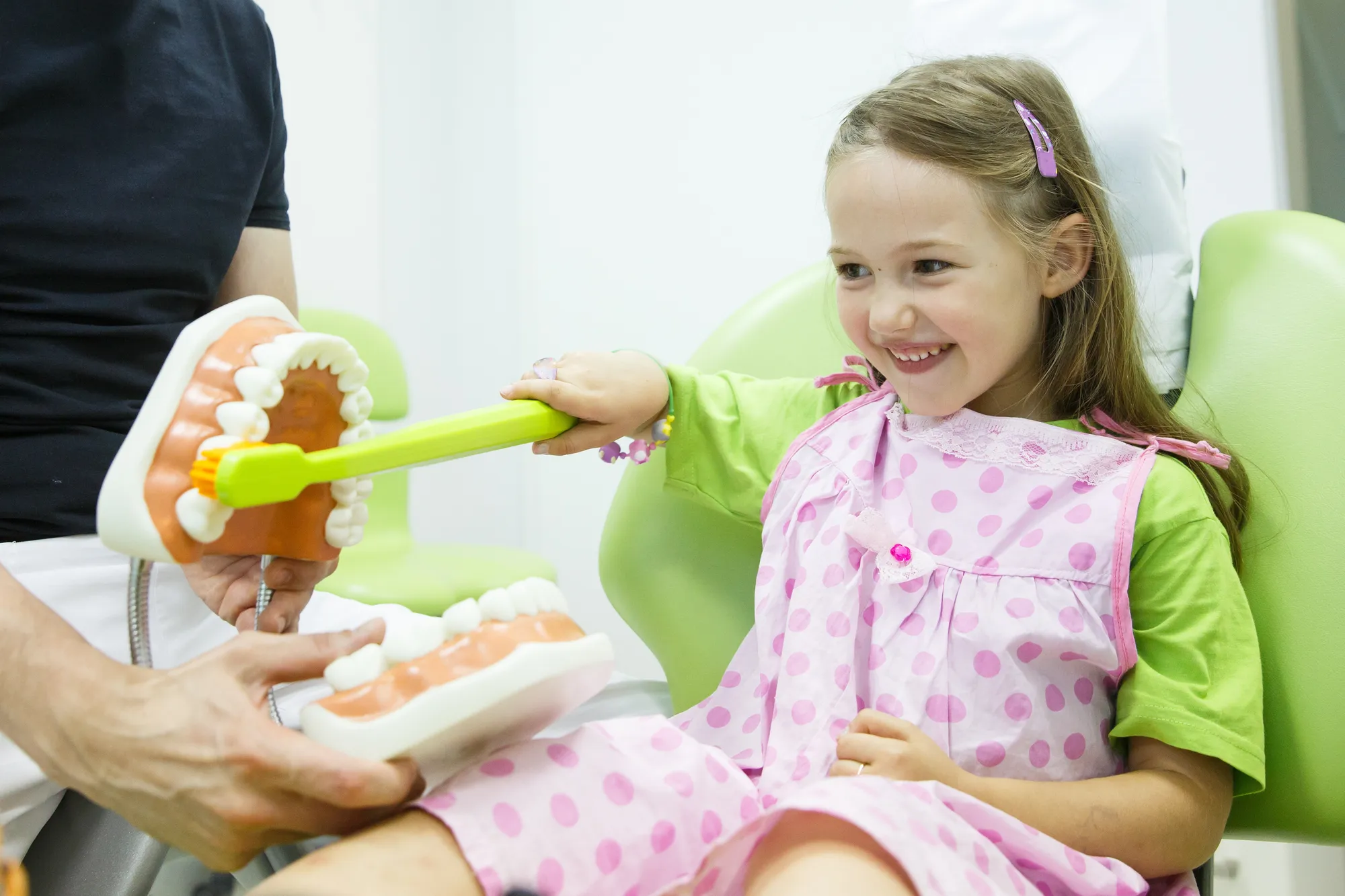
If your child becomes nervous the moment you mention a dental appointment, you are not alone.
Some children are uneasy about unfamiliar sounds, new environments, dental instruments, or simply not knowing what will happen next. For others, dental anxiety is strong enough that they cry, refuse treatment, or become extremely distressed during appointments.
As a parent, watching your child struggle is difficult. You want them to get the care they need without building a negative association with the dentist.
Sedation dentistry may be one option for children who have significant anxiety or difficulty cooperating during treatment. At Strong Smiles Pediatric Dentistry, we take the time to understand your child's needs and decide whether sedation is appropriate.
Sedation dentistry uses medication or calming techniques to help a child relax during dental care. It does not always mean your child will be completely asleep.
The type and level of sedation depend on your child's age, health, anxiety level, treatment needs, and the recommendations of the dental team.
Parents sometimes use "sedation" and "sleep dentistry" interchangeably, but they are not the same thing.
Some forms of sedation let a child stay awake and responsive while feeling much more relaxed. General anesthesia is a deeper level of unconsciousness and requires specific medical protocols. Your child's dentist will explain exactly what is planned before treatment.
Dental anxiety in children can develop for many reasons.
A painful or frightening medical or dental experience can make future visits stressful.
Children may worry because they do not know what the dentist will do.
The sound of dental equipment, bright lights, unfamiliar smells, or someone working inside their mouth can be overwhelming. Some children, including patients with special needs, may need extra support to feel comfortable in the dental chair.
Children often pick up on adults' fears. Calm, reassuring language helps.
The goal of sedation is to make dental treatment more manageable and comfortable.
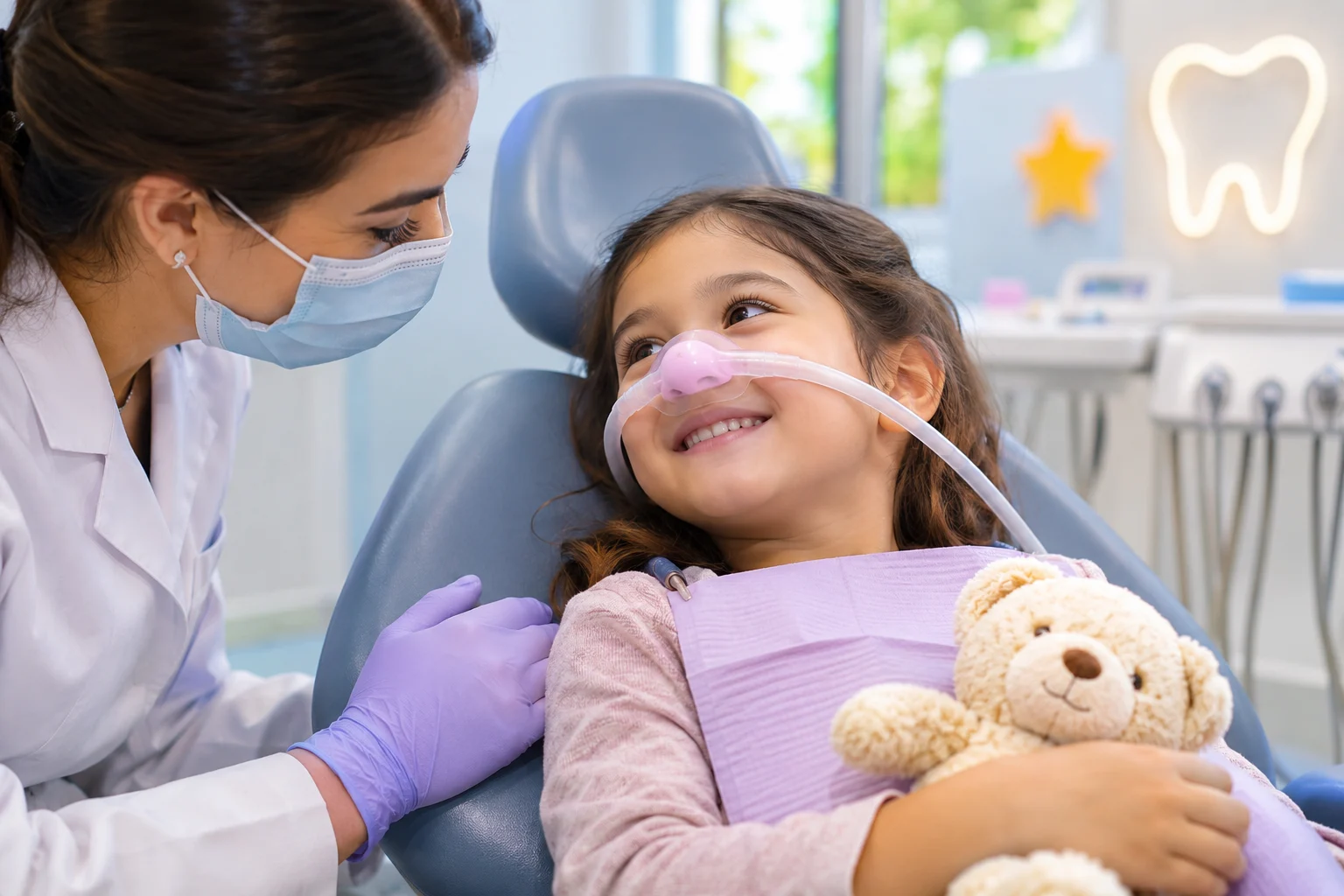
Nitrous oxide, often called laughing gas, is one of the most commonly used forms of minimal sedation in dentistry.
Your child breathes a mixture of nitrous oxide and oxygen through a small mask placed over the nose. They remain conscious and can communicate, but may feel relaxed and less anxious.
Children may describe feeling light, warm, tingly, or pleasantly relaxed. Some become giggly. The effects typically wear off quickly once the nitrous oxide is stopped and your child breathes normal oxygen.
For some children, oral sedation may be considered. Medication is given by mouth before or during the dental visit, depending on the prescribed protocol.
No. The dentist must consider your child's medical history, medications, allergies, age, weight, anxiety level, and planned treatment before deciding whether oral sedation is appropriate.
Your dental team will give you specific instructions. These may cover eating and drinking before the appointment, medications, transportation, and what to expect afterward.
Sedation instructions are important for your child's safety. Follow the dental team's directions exactly, particularly regarding food, drinks, and medications.
Your child will be monitored according to the sedation method being used. The dental team focuses on both comfort and safety throughout treatment.
Your calm presence makes a difference. Avoid words that may increase fear. Instead of saying "This won't hurt," try simple, reassuring language such as "The dentist will help take care of your tooth."
When appropriately selected and administered by trained professionals following established safety protocols, sedation can be a useful tool in pediatric dentistry. The dental team should review your child's health history and determine the safest approach for their individual circumstances.
"Sleep dentistry" can mean different things to different people. Some parents use it to describe sedation that leaves a child very relaxed or drowsy. General anesthesia is a different level of care.
Your pediatric dental provider should explain exactly what type of sedation is being recommended rather than relying on a general label.
Sedation is not always necessary. Many children do well with a gentle, child-friendly approach and behavior guidance techniques that build comfort and trust.
Your child's fear is real, even if the procedure seems routine to you. The goal is not to force a frightened child through treatment. It is to find an approach that supports comfort, trust, and necessary dental care.
If your child has significant dental anxiety or has struggled during previous appointments, contact Strong Smiles Pediatric Dentistry to discuss sedation dentistry in Strongsville, Ohio and find the approach that suits your child. Our children's dentistry team is here to help your child feel safe at every visit.
What is sedation dentistry for children?
Sedation dentistry uses medication or other techniques to help children relax during dental treatment when anxiety, age, treatment needs, or cooperation challenges make ordinary care difficult.
Is nitrous oxide safe for kids?
Nitrous oxide is commonly used in pediatric dentistry for appropriately selected patients. Your child's dentist will determine whether it is suitable.
Will my child be awake with nitrous oxide? Yes. Nitrous oxide is generally a form of minimal sedation, so children remain conscious and able to communicate.
Is oral sedation stronger than nitrous oxide?
Oral sedation can produce a deeper level of relaxation than nitrous oxide, but the effect varies. Your dentist will determine which approach is appropriate.
Does sedation put children completely to sleep?
Not necessarily. Sedation and general anesthesia are different. Your dental team will explain the level of consciousness expected.
Can sedation help a child with dental anxiety?
It can help some children with significant anxiety, particularly when anxiety would otherwise prevent necessary treatment.
Does every child need sedation?
No. Many children receive dental treatment successfully using communication, distraction, positive reinforcement, and a gentle pediatric approach.
What should my child eat before sedation?
This depends on the type of sedation and your dental team's instructions. Follow the specific eating and drinking guidelines you receive.
Can parents stay with their child during treatment?
Policies vary by office and procedure. Your dental team can explain what to expect before the appointment.
What should I tell the dentist about my child?
Share your child's complete health history, medications, allergies, previous sedation experiences, and any concerns you have about the appointment.